Trump and Starmer Pledge Closer UK–US Ties but Clash Over Palestine Recognition
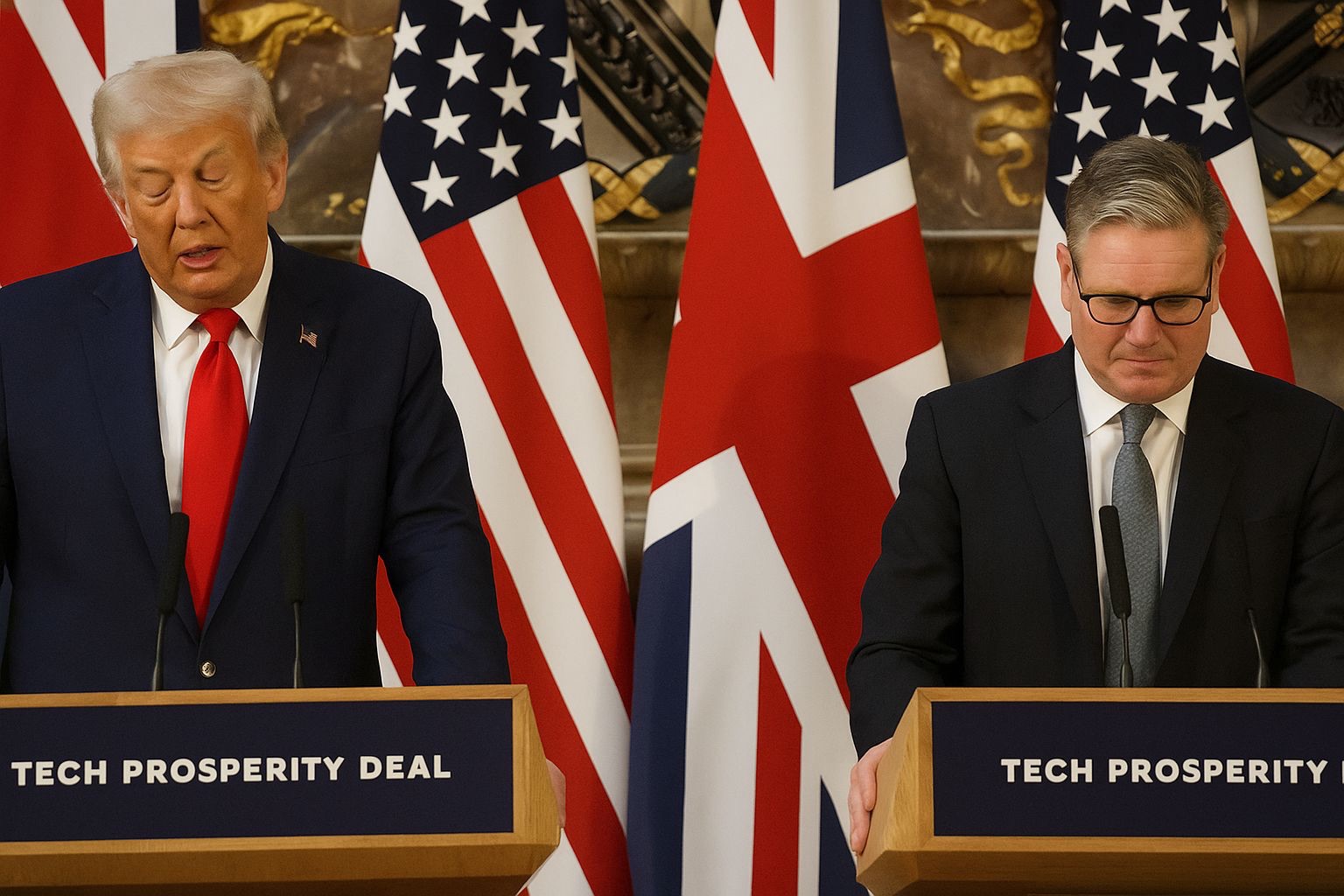
Prime Minister Keir Starmer and U.S. President Donald Trump pledged to deepen the “special relationship” between the United Kingdom and the United States during a high-profile visit to London, announcing major investment deals and closer cooperation on technology and security. However, sharp differences emerged over the recognition of a Palestinian state and approaches to global conflicts.
£150 Billion Investment Package
The leaders unveiled a landmark agreement that will see around £150 billion in U.S. investment flow into the UK, targeting infrastructure, clean energy, and advanced technology. A parallel “Technology Prosperity Deal” will promote collaboration in artificial intelligence, quantum computing, and civil nuclear projects.
Starmer hailed the agreements as “a turning point for Britain’s future economy,” while Trump described the UK as “one of our strongest partners in building prosperity and security.”
Divergence on Foreign Policy
On Ukraine, Starmer pressed Trump to increase pressure on Vladimir Putin, urging further sanctions and coordinated Western action. While Trump condemned Russia’s ongoing war, he stopped short of announcing new punitive measures.
The most significant clash came over Palestine. Starmer has said Britain could formally recognise a Palestinian state if humanitarian access and ceasefire conditions are not met. Trump firmly rejected the move, stating: “I disagree with that policy. Recognition now would be a mistake.”
Migration and Security
Trump also urged Britain to adopt tougher measures to curb illegal migration, even suggesting the military could be deployed. Starmer pushed back, pointing to his government’s new bilateral agreement with France to return asylum seekers.
Security concerns extended further afield, with Trump raising the possibility of regaining U.S. control over the former Bagram airbase in Afghanistan, underlining Washington’s shifting strategic focus.
Tariffs and Trade Frictions
Despite the celebratory tone, trade tensions remain unresolved. British steel producers continue to face high U.S. tariffs, and Starmer pressed for reductions. Trump praised Starmer’s negotiating toughness but offered no immediate concessions.
A “New Chapter” Amid Old Frictions
Both leaders stressed their commitment to the transatlantic alliance, with Trump calling the partnership “unbreakable” and Starmer describing it as “essential for security and prosperity.” Yet, their disagreements on Palestine, trade, and migration underscore the complexities of a relationship that continues to mix cooperation with contention.