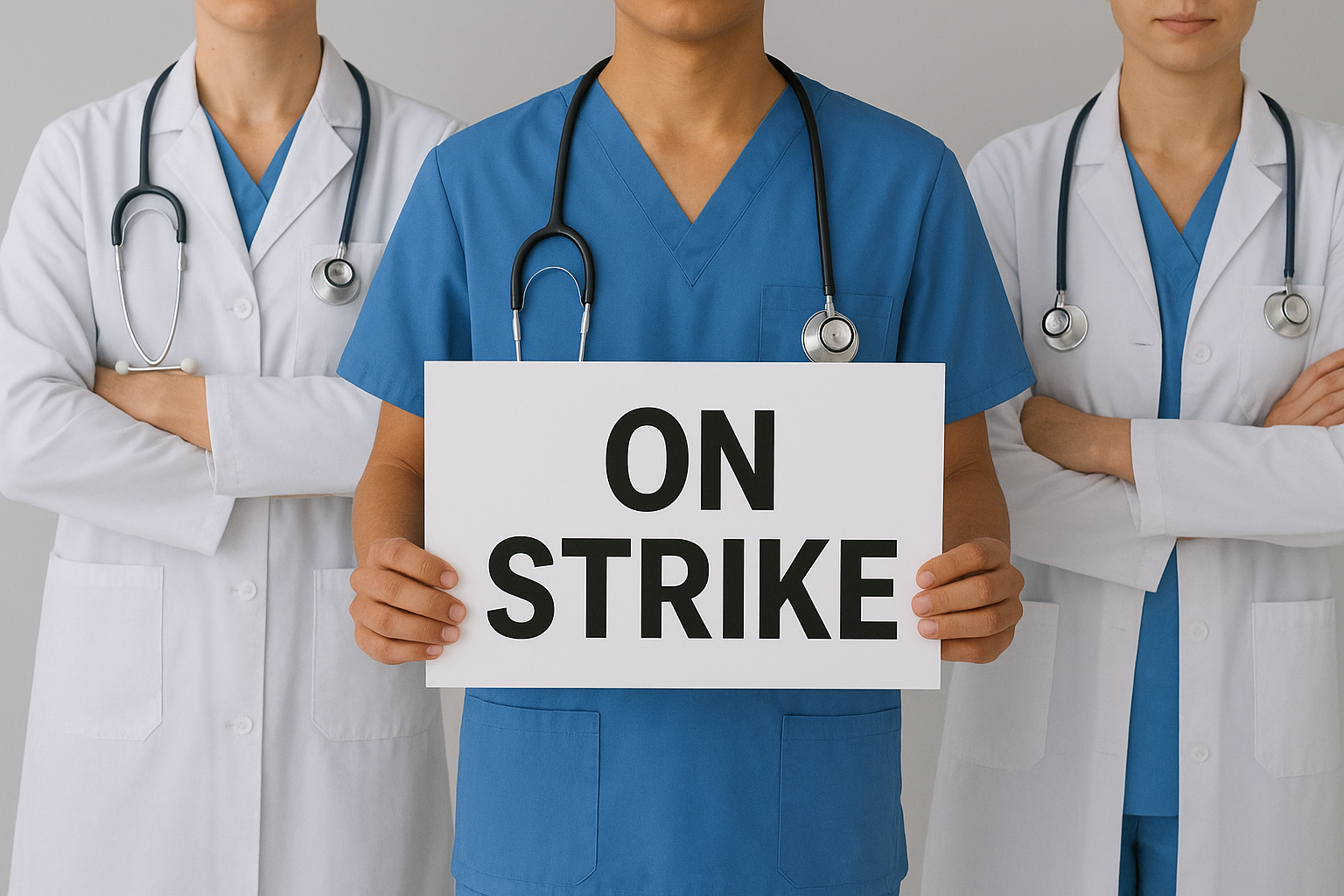
The British Medical Association (BMA) has confirmed that resident doctors in England will go on strike for five consecutive days, from 7 am on 14 November until 7 am on 19 November, in a dispute over pay erosion and job security.
Key issues:
- The BMA says the strike follows a breakdown in talks with the government, which it accuses of failing to present a “credible plan” for restoring doctors’ pay in real terms and tackling job shortages among newly trained doctors.
- According to the BMA, many second-year doctors are struggling to secure substantive employment or regular locum roles, while shifts remain unfilled in hospitals.
- The government, represented by Wes Streeting, Health Secretary, has criticised the strike as “unreasonable and unnecessary”, and said it cannot afford further pay increases this year.
Potential impact:
With resident doctors making up nearly half of the medical workforce in the NHS in England, the walk-out is set to disrupt hospital services, delay appointments and raise concerns as the NHS heads into its busier winter season.
What happens next:
The BMA is urging the government to return to negotiations with a meaningful offer on pay and jobs. Meanwhile, hospitals and trusts are preparing contingency plans to mitigate disruption during the strike period.
Quote:
Dr Jack Fletcher, Chair of the BMA’s Resident Doctors Committee, said:
“This is not where we wanted to be. We have spent the last week in talks with Government … We know … half of second year doctors in England are struggling to find jobs … This is a situation which cannot go on.”
Bottom line:
The planned strike by resident doctors highlights deep tensions over pay restoration and career progression in the NHS workforce. The government faces pressure to balance fiscal constraints with the need to retain doctors and safeguard services and the coming five-day strike is likely to test how well the system copes.