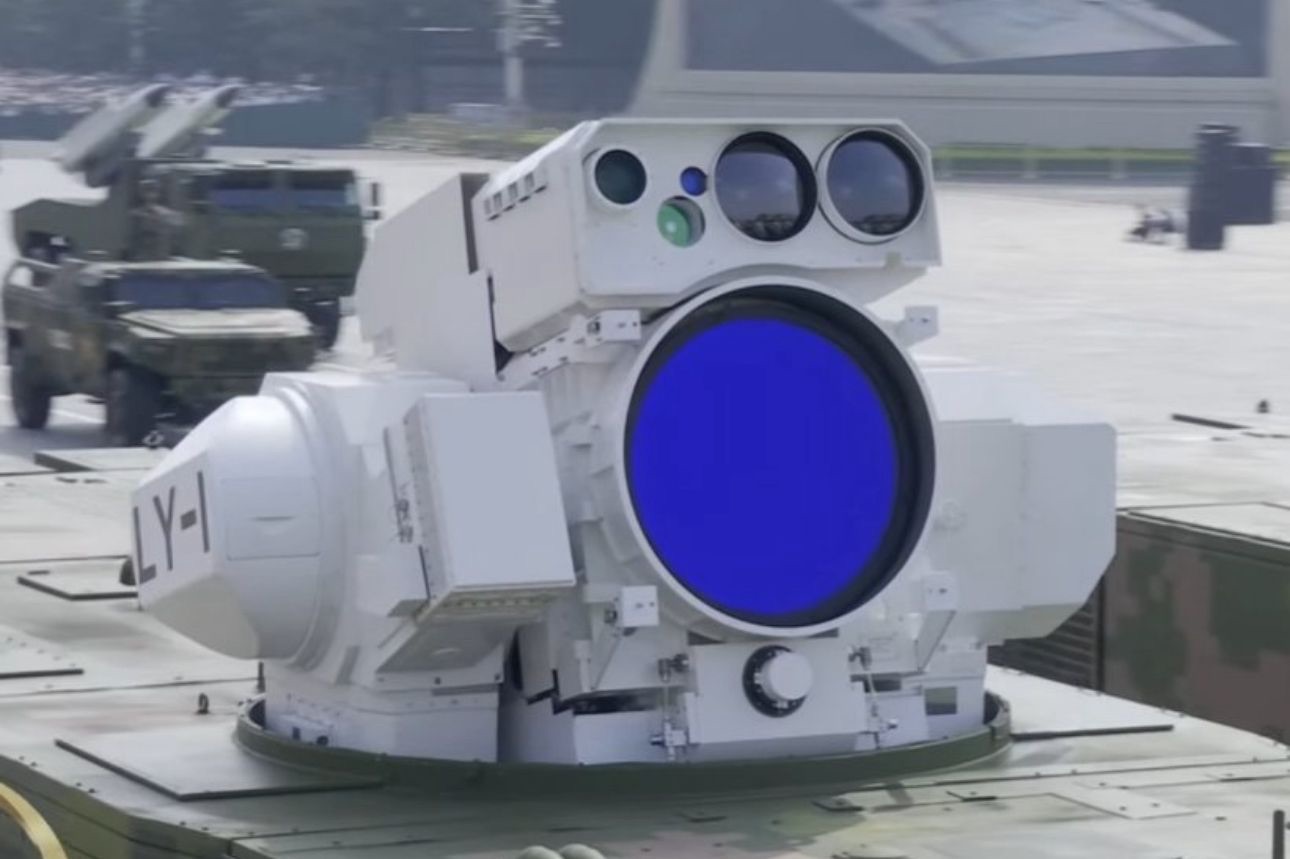
On September 3, 2025, China marked a momentous occasion at its Victory Day military parade in Beijing its first such display in six years by publicly revealing the LY-1 laser weapon system, a high-energy, shipborne directed-energy system that could reshape future naval warfare.
A New Layer in Maritime Defense
The LY-1 joins a formidable suite of naval air defense assets, forming part of a layered, multi-dimensional defense architecture that includes:
HHQ-9C: Long-range interceptor capable of countering high-altitude ballistic threats.
HQ-16C: Medium-range missile offering coverage against subsonic and supersonic cruise missiles.
A close-range point-defense missile system rounding out short-distance interception capabilities.
LY-1 laser: Introduced to complete the spectrum with a precision, cost-efficient directed-energy solution.
This strategic layering spanning long, medium, and close ranges is designed to thwart saturation attacks, where adversaries employ multiple inbound threats simultaneously.
What Makes the LY-1 Unique?
Several standout features of the LY-1 were highlighted during and following the parade:
First public demonstration: Although under development since at least 2019 and tested on vessels like the Type-071 in 2024, this was LY-1’s public debut.
Rapid, precise interception: The system can strike targets at the speed of light, avoiding lag between radar lock-on and missile launch, while achieving near-instantaneous effect.
Low cost-per-shot: Powered by onboard energy systems, each laser shot is significantly more affordable than traditional interceptor missiles.
Optical sensor disruption: Rather than destroying the entire target, the LY-1 disables optical sensors and guidance systems effectively blinding or immobilizing enemy assets with surgical effect.
Operationally scalable: Mounted on ships, where space allows for powerful energy units, the LY-1 offers sustained high-power capability compared to land-based systems.
Global Context and Strategic Significance
China’s parade signaled more than just technical prowess it showcased a bold strategic posture. The inclusion of the LY-1 along with hypersonic missiles, unmanned systems, and its completed nuclear triad serves as both a technological milestone and a geopolitical message.
Globally, other powers such as the U.S., Israel, the UK, Germany, and Russia are also actively developing directed-energy weapons, but China’s decision to display the LY-1 so publicly represents a statement of confidence in its operational readiness.
Broader Implications
Redefining naval norms: The shift toward energy-based defense suggests future naval combat will prioritize instantaneous, precision strikes over conventional interceptors.
Operational resilience: In dense threat environments, lasers offer sustained engagement capability without exhausting munitions a strategic advantage.
Technological prestige: Publicly parading LY-1 strengthens China’s narrative of self-reliance and innovation, and its ability to compete with established military powers.