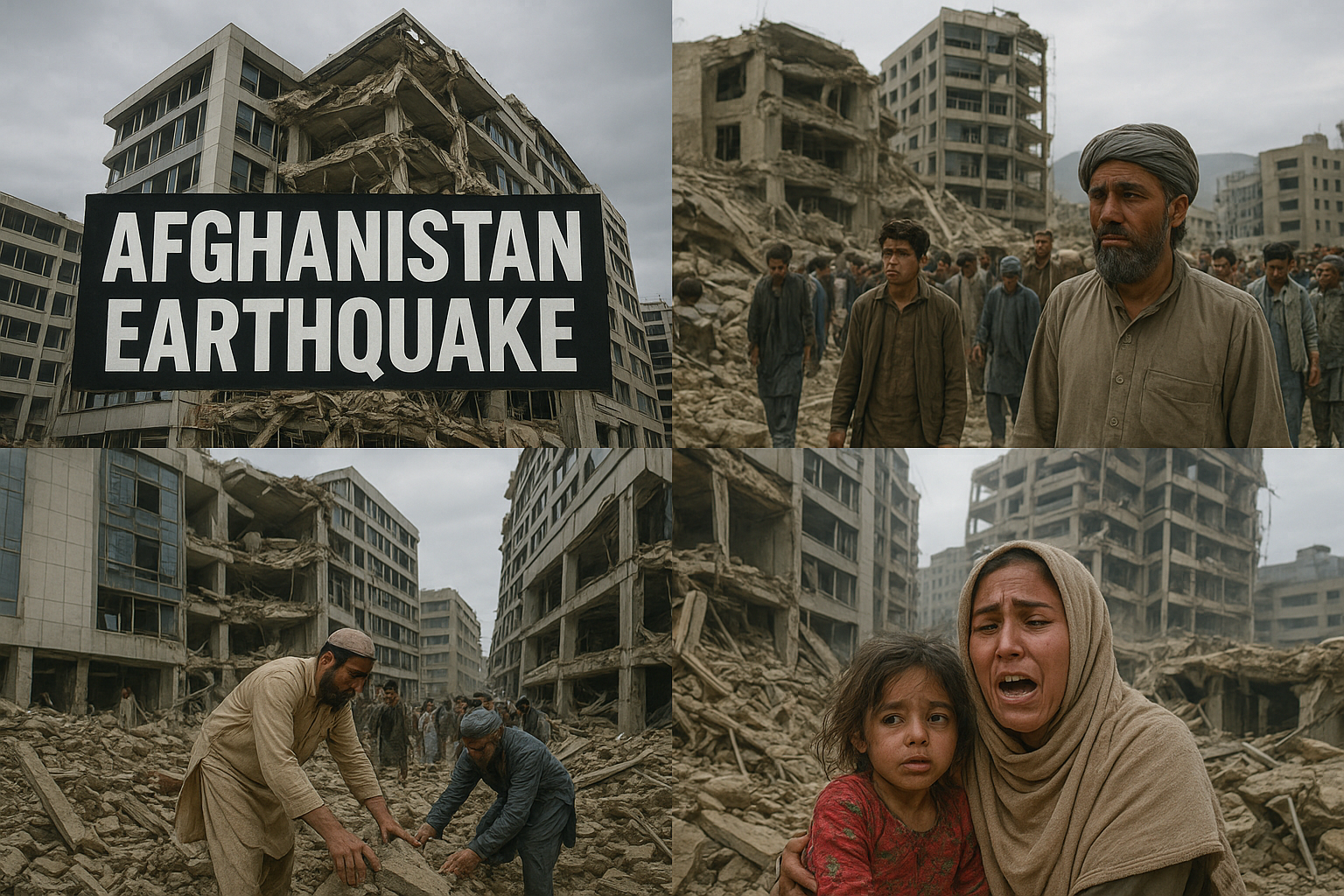
A powerful earthquake has struck eastern Afghanistan, leaving devastation across several provinces and killing hundreds of people. Rescue operations are underway as officials warn the death toll is likely to rise.
According to the United States Geological Survey, the quake measured around 6.0 magnitude and hit near the border with Pakistan late Sunday night. Its shallow depth intensified the impact, leveling entire villages built with mud and stone.
Rising Casualties
Early figures from Afghan authorities suggest between 600 and 800 people have been killed, with more than 1,500 injured. Some international reports place the injured as high as 2,800 as rescue teams continue to uncover victims in remote mountain villages.

The hardest-hit areas include Kunar and Nangarhar provinces, where landslides and damaged roads are blocking access. Survivors describe scenes of destruction, with families trapped beneath rubble and homes reduced to dust within seconds.
Rescue and Relief Efforts
Emergency workers, local volunteers, and Taliban-led authorities are conducting desperate search-and-rescue missions. Helicopters have been deployed to airlift the injured, while makeshift medical tents are being set up in nearby towns.
International aid agencies warn that Afghanistan’s fragile infrastructure, compounded by ongoing humanitarian crises, could slow relief efforts. “The scale of the destruction is immense,” one aid worker said. “Immediate medical supplies, food, and shelter are urgently needed.”
Regional Tremors Felt
The earthquake’s tremors were felt across the border in Pakistan and parts of Central Asia, though no major damage has been reported outside Afghanistan. Seismologists caution that aftershocks are expected in the coming days.
A Nation in Mourning
Afghanistan sits on a major seismic fault line and has suffered a series of deadly earthquakes in recent decades. For communities already struggling with poverty and conflict, the latest disaster has brought fresh tragedy.
The Afghan government has appealed for international assistance, while aid agencies are preparing for a long recovery effort. For survivors, the immediate focus remains on saving those still trapped beneath collapsed homes.