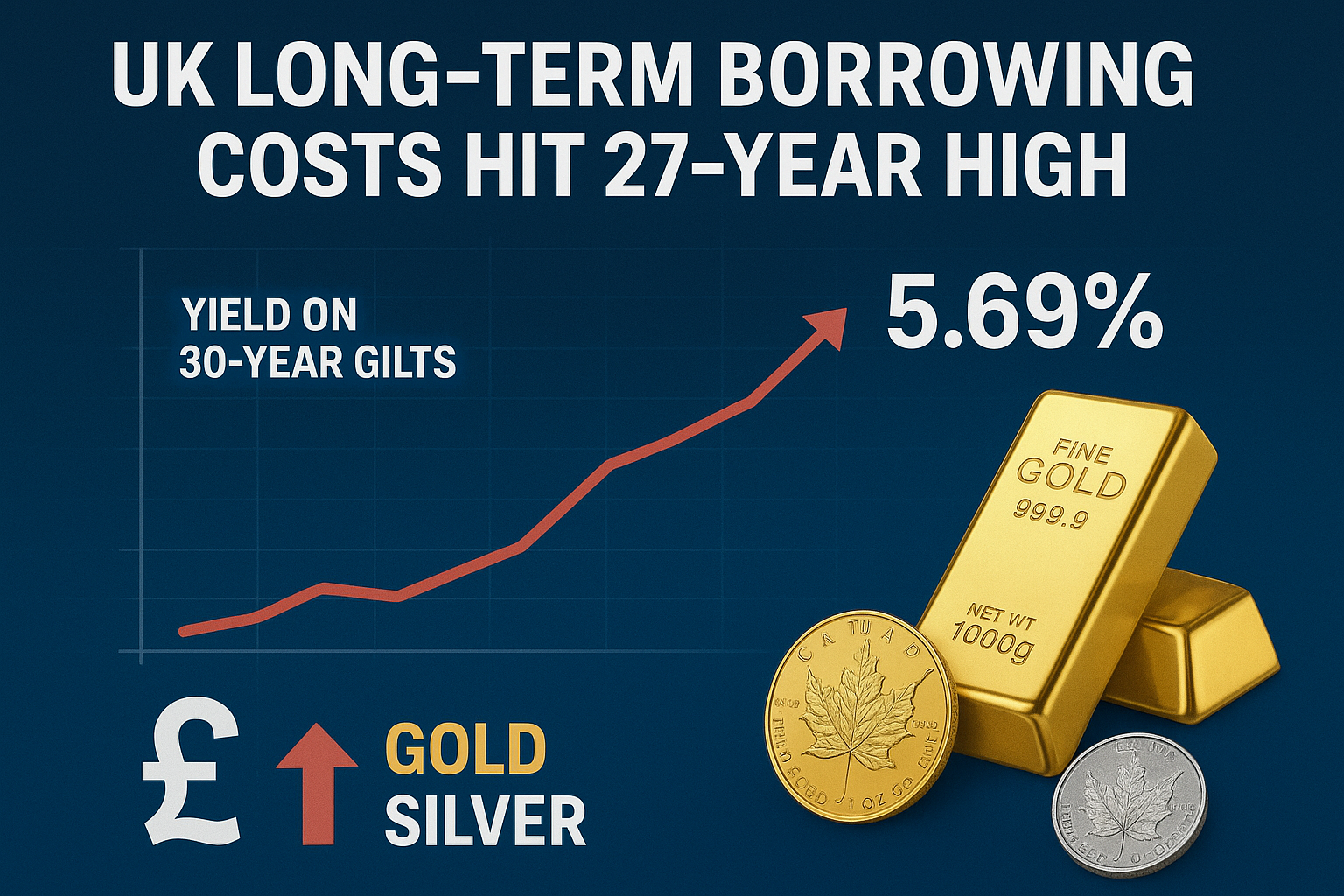
The yield on Britain’s long-dated government bonds climbed to levels not seen since 1998 on Tuesday, intensifying pressure on the government ahead of the autumn budget and sending investors into traditional safe-haven assets such as gold and silver. The move reflected a wider sell-off in global bonds as markets priced in higher term premia and uncertainty over fiscal plans.
Key facts
- The yield on 30-year UK gilts rose to roughly 5.69%, the highest level in 27 years, as traders dumped long-dated government debt.
- Sterling weakened sharply falling about 1%–1.2% against the dollar as markets reacted to the gilt sell-off and worries about the UK fiscal outlook.
- The sell-off coincided with a jump in safe-haven metals: gold pushed to multiyear record levels and silver also strengthened, as investors sought protection from rising uncertainty.
- The UK Debt Management Office sold a large gilt issue in the day’s auction while the market remained volatile; reports noted strong demand despite the higher yields required by investors.
What happened markets and drivers
Longer-dated gilt yields spiked on Tuesday amid both global and UK-specific factors. Internationally, bond markets have been pressured by a re-pricing of long yields including rises in US Treasuries and German bunds while domestically investors have grown nervous about Britain’s fiscal outlook ahead of Chancellor Rachel Reeves’s autumn budget. That combination lifted yields on the long end of the curve more sharply than on shorter maturities.
Analysts point to three main drivers: a broader global move out of long government debt, fresh concerns about the size of future UK borrowing needs and uncertainty over the government’s path to meet fiscal targets. Those concerns increase the “term premium” investors demand to hold long-dated, sovereign credit effectively raising borrowing costs for the government.
Market reaction: currency, equities and commodities
The pound was one of the worst-performing major currencies on the day, sliding against the dollar as risk sentiment soured. UK equities felt the strain too: domestically focused sectors such as banks, utilities and real-estate names fell as higher yields clouded growth prospects and raised the discount rate applied to future earnings.
At the same time, investors rotated into assets they consider inflation or crisis hedges. Gold breached multiyear highs and silver strengthened, supported by a weaker dollar, worries about inflation and broad geopolitical and economic uncertainty that has prompted central banks and private buyers to increase bullion demand.
Political and fiscal implications
Higher long-dated borrowing costs reduce the government’s fiscal headroom. Commentators and market participants warned that the surge in yields will make the autumn budget decisions more delicate: higher interest costs and a possible need to close fiscal gaps could force tougher choices on spending or taxation. The market reaction also amplifies political pressure on the Treasury and the prime minister’s team to demonstrate credible, medium-term fiscal plans.
What the data and auctions showed
Despite the jitters, the UK conducted a large gilt auction during the session. Reports described the sale as attracting strong bids even though the government had to pay higher yields than earlier in the year underscoring that demand exists but only at elevated borrowing costs. Shorter-dated yields also moved higher, but the most dramatic moves were at the long end (20–30 year maturities).
- Autumn Budget: Markets will scrutinise Chancellor Rachel Reeves’s fiscal plans for signs that borrowing needs will be brought under durable control. Any perceived shortfall in credibility is likely to keep upward pressure on yields.
- Global bond moves: US Treasury and European yields remain important drivers. Further spikes abroad would likely feed through to gilts.
- Bank of England signals: Expectations around future Bank of England policy and inflation readings will influence real yields and the demand for long-dated UK debt. Watch inflation prints and BoE commentary closely.
Bottom line
Tuesday’s surge in long-dated gilt yields the highest in 27 years is a reminder that even advanced-economy sovereign borrowers can face rapid repricing when fiscal or global uncertainties rise. For the UK, the immediate consequence is higher interest costs and a narrowed set of options for the upcoming budget; for markets, it has triggered a classic risk-off move into safe havens such as gold and silver.