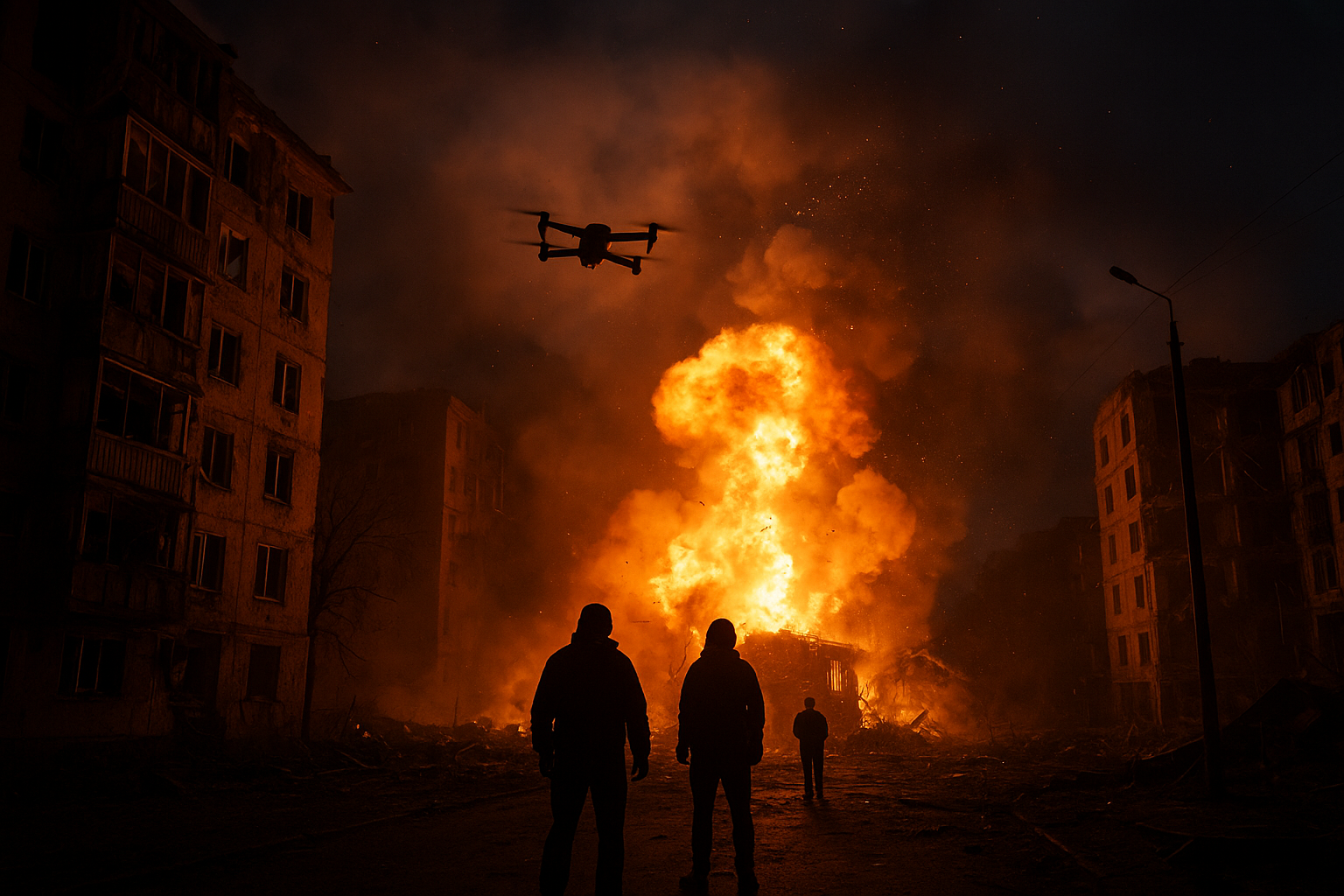
In a sweeping assault carried out overnight into September 28, Russian forces launched what Ukrainian officials say was one of the most intense drone-and-missile attacks in the war to date. The strikes, which lasted more than 12 hours, hit Kyiv as well as several regions across the country.
Casualties and Damage
At least four people were killed, including a 12-year-old girl, while dozens more were wounded. In Kyiv, damage was reported in residential districts, with strikes impacting a cardiology clinic, apartments, vehicles, and infrastructure. In the Zaporizhzhia region, several buildings were struck, and injuries were reported, including among children. Authorities described fires, structural collapses, and smoke billowing across multiple districts in the capital.
Scale and Response
Ukrainian officials claimed that around 500 drones and over 40 missiles were launched during the assault. Air defence systems reportedly intercepted the majority of the incoming ordnance. In response to the threat, Poland scrambled fighter jets and temporarily closed airspace near its border with Ukraine. Ukrainian President Volodymyr Zelensky condemned the attack as a “brutal” act of aggression and called for stronger international pressure on Russia.
Broader Implications
The assault underscores Russia’s increasing reliance on drone and missile waves to saturate defense systems and inflict damage on civilian areas. Observers warn that the scale and persistence of such raids suggest a shift toward continuous pressure tactics, with deep consequences for civilian protection and the war’s trajectory.
As investigations and rescue efforts continue, the full toll of this strike remains unknown. Ukraine’s leaders and international partners are watching closely for both the humanitarian fallout and any shift in Western policy responses.