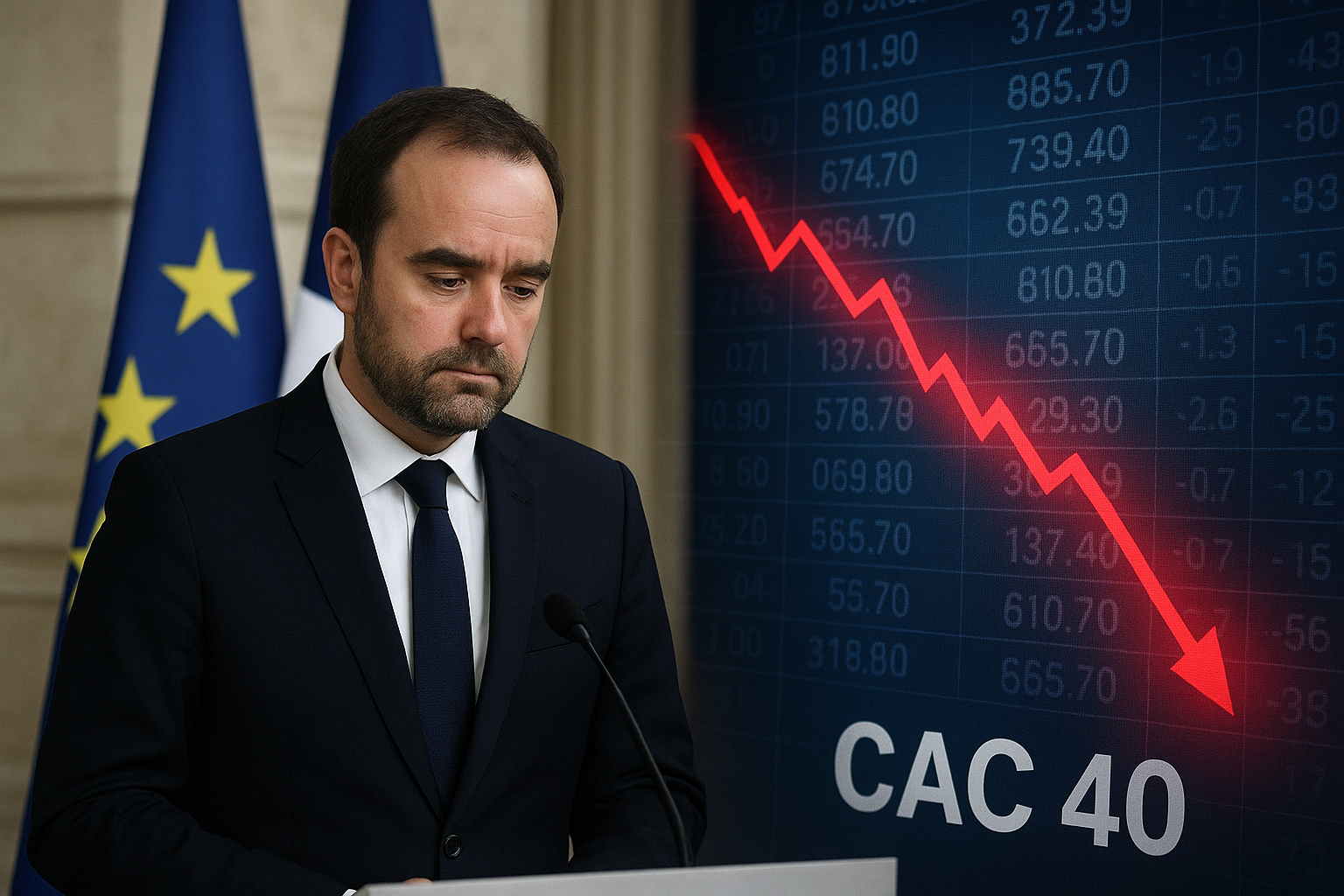
French Prime Minister Sébastien Lecornu tendered his resignation just hours after unveiling his new cabinet, plunging France into renewed political turmoil. President Emmanuel Macron accepted the resignation, marking Lecornu the shortest-serving premier in the Fifth Republic’s history.
The surprise resignation comes just 26 days after Lecornu assumed office as prime minister, succeeding François Bayrou’s administration, which had collapsed amid internal disputes.
The collapse comes amid deep divisions in parliament and mounting pressure over budget reforms. Lecornu’s government was already faltering under criticism from both left- and right-wing factions reluctant to back his agenda.
Markets Rippled by Political Shock
The stock market reacted swiftly and sharply to the news. France’s benchmark CAC 40 index fell by about 2 % on heavy selling. Major French banks such as BNP Paribas, Société Générale, and Crédit Agricole saw declines of 4–7 %, driving much of the downward pressure.
In the bond market, 10-year French yields jumped to around 3.58 %, widening the spread over German bunds to a nine-month high. Meanwhile, the euro weakened by 0.5–0.7 % versus the US dollar, reflecting investor flight from riskier assets.
Analysts described the abrupt resignation as symptomatic of France’s political paralysis, warning that prolonged instability could undercut investor confidence, elevate borrowing costs, and deter business investment. Some see risks of contagion into broader European markets, especially if the French government remains unable to form a stable majority.
As France braces for renewed political standoff, the markets will be watching the next moves in Paris with high vigilance particularly whether snap elections are called, or a compromise government can emerge to restore confidence.