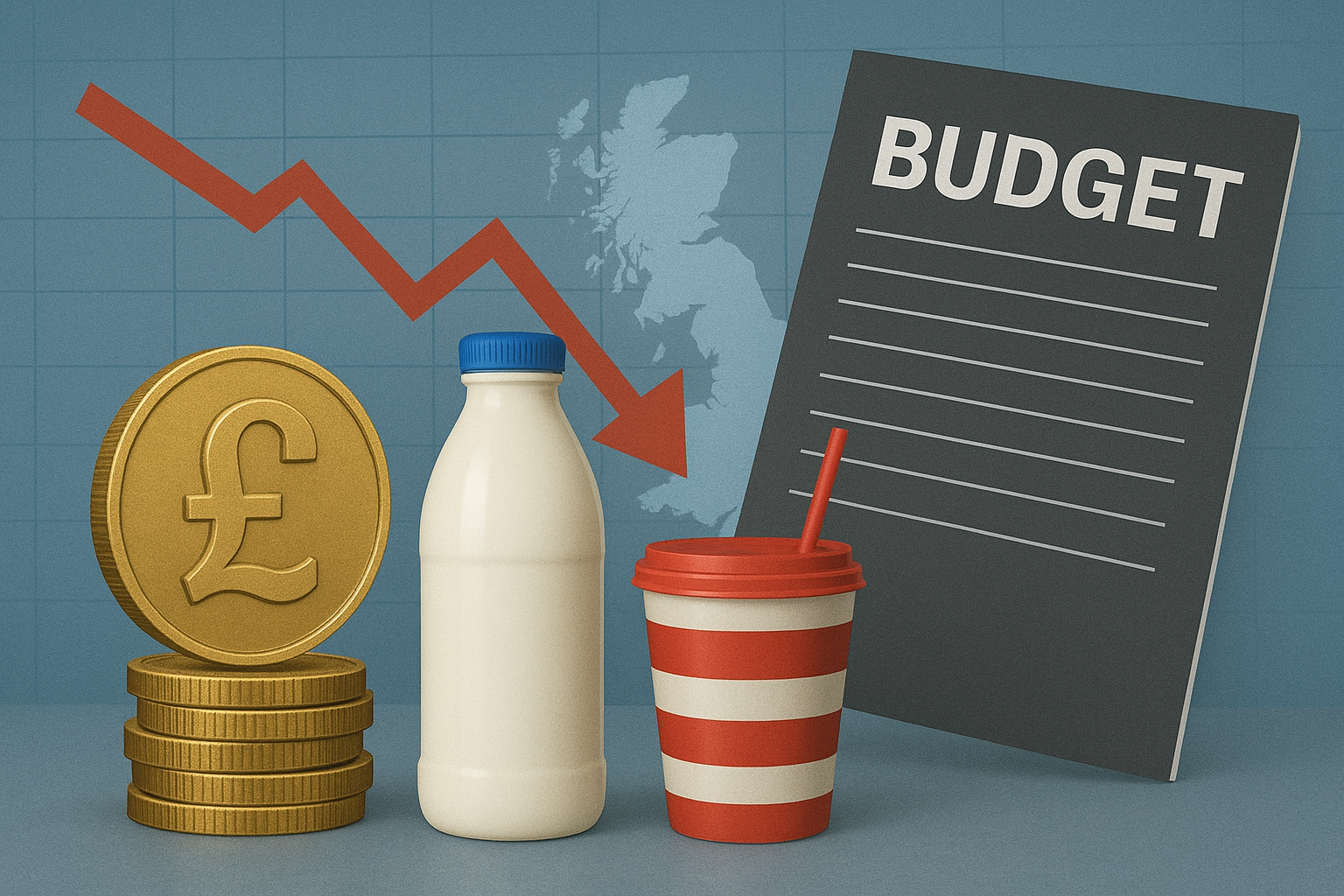
The Rachel Reeves-led Government has revealed the first significant policy changes in its Autumn Budget, as it grapples with what officials describe as a roughly £20 billion to £30 billion fiscal gap.
Key Announcements
- A reduction in the annual cash ISA allowance from £20,000 to £12,000 is set to take effect; the move is aimed at nudging savers into investing more broadly.
- The celebrated sugar tax is being expanded so that packaged milk-based drinks (milkshakes, pre-packaged lattes) above a threshold of 4.5 g sugar per 100 ml will be taxed starting in January 2028.
- Drinks made fresh in cafés are exempt.
- The pound sterling is showing signs of volatile behaviour in advance of the full Budget statement, with implied volatility for sterling rising sharply, reflecting market jitters over the Government’s fiscal plans.
Reeves and her team are under pressure. Their fiscal rules commit them to ensuring debt falls as a share of GDP and to controlling day-to-day spending all while maintaining growth and public service investment.
Despite pledges to avoid broad tax rises on working-people such as income tax and National Insurance, the Government appears set to rely on a menu of targeted tax increases (wealth, property, savings) and fewer headline cuts to services.
What to Watch
With the full Budget statement scheduled for 12:30 pm on Wednesday 26 November in the House of Commons, key elements still to emerge include:
- The updated economic and fiscal forecasts from the Office for Budget Responsibility (OBR), which will underpin the Government’s tax and spending choices.
- Details of how public services (health, education, defence) will be funded amid constrained resources. More clarity on any wealth-tax measures, property levies or additional savings reforms.
.