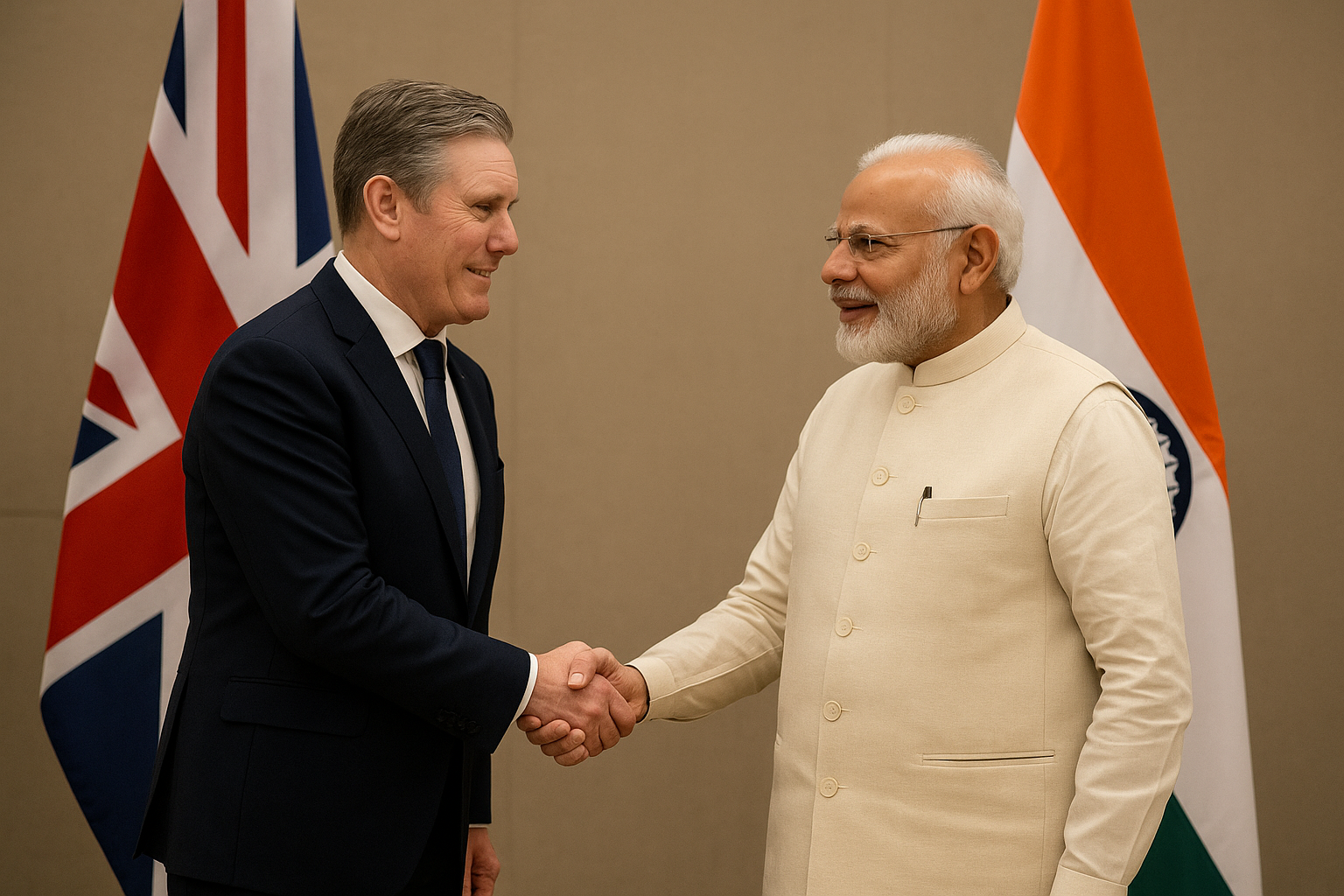
British Prime Minister Keir Starmer used a two-day visit to India this week to press home the economic promise of the landmark UK–India trade agreement and to sign a string of commercial and defence arrangements that London says will boost jobs and investment on both sides.
Starmer accompanied by a 125-strong business and education delegation hailed the newly completed India–UK Comprehensive Economic and Trade Agreement (CETA) as the springboard for deeper commercial ties and fresh inward investment into the UK. Downing Street and Indian officials framed the trip as the start of rapid implementation of the agreement’s measures to reduce trade frictions and expand cooperation in services, technology and critical supply chains.
The visit produced immediate, headline-grabbing outcomes. Governments and business groups announced around £1.3 billion of investments from Indian firms into the UK, and officials said the trade package together with related memoranda could increase bilateral trade substantially by 2040. Starmer’s team also unveiled pledges to set up joint innovation hubs, including a connectivity and innovation centre and a joint artificial-intelligence centre intended to deepen research and commercial collaboration.
Industry deals signed in Mumbai included a defence contract for UK-made lightweight multirole missiles reported at roughly £350 million produced by Thales in Northern Ireland, a deal Prime Minister’s Office spokespeople said will protect hundreds of jobs at home. Officials also flagged the next phase of a naval partnership focused on electric-powered ship engines, part of a broader defence industrial roadmap the two sides are negotiating.
Downing Street estimated the commercial packages agreed during the visit would support thousands of jobs in the UK and provide a near-term boost to exporters and service providers. British ministers repeatedly framed the trip not as an end in itself but as the start of practical work to implement the treaty: speeding customs facilitation, encouraging Indian investment in UK manufacturing and securing critical mineral supply lines for green technologies.
Political and civil-society voices offered a mixed response. Starmer faced questions about whether the economic push would change UK visa settings a point he sought to put to rest by insisting the trade deal would not trigger new visa concessions and human-rights groups warned the government to keep scrutiny on values alongside commerce. The prime minister also drew attention for his interest in India’s digital ID systems as the UK develops its own national schemes, a move that commentators said will require close examination of privacy and inclusion safeguards.
In Mumbai’s fintech forum and in bilateral meetings with Prime Minister Narendra Modi, Starmer repeatedly pitched the partnership as mutually beneficial: exporting British technology and services while opening UK markets to Indian capital and talent. Both governments signed a formal joint statement setting out a shared agenda on trade, technology, defence co-operation and education, and pledged to convert the new legal framework into tangible contracts and projects over the coming months.
Analysts say the success of the visit will be judged by how quickly ministers translate headline commitments into implemented agreements that remove friction at ports, improve regulatory cooperation and lock in secure supply chains for critical sectors. For now London and New Delhi are banking on a political and commercial reset: one designed to deliver jobs, investment and strategic resilience while navigating the thornier questions about privacy, human rights and global geopolitics that inevitably accompany deeper ties.